
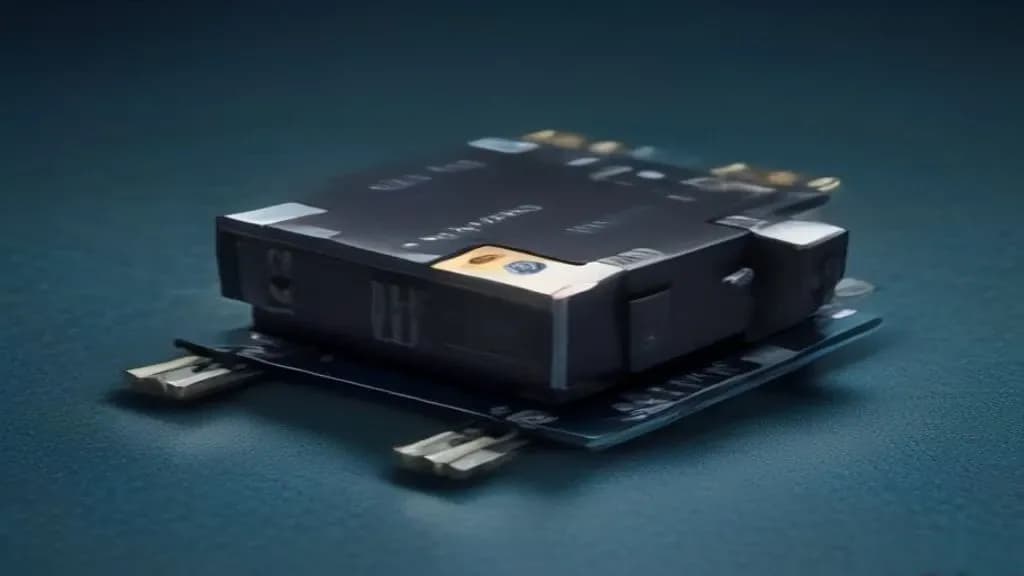
Optical Layer Physics: 10G SR vs 10G LR vs 25G SFP28
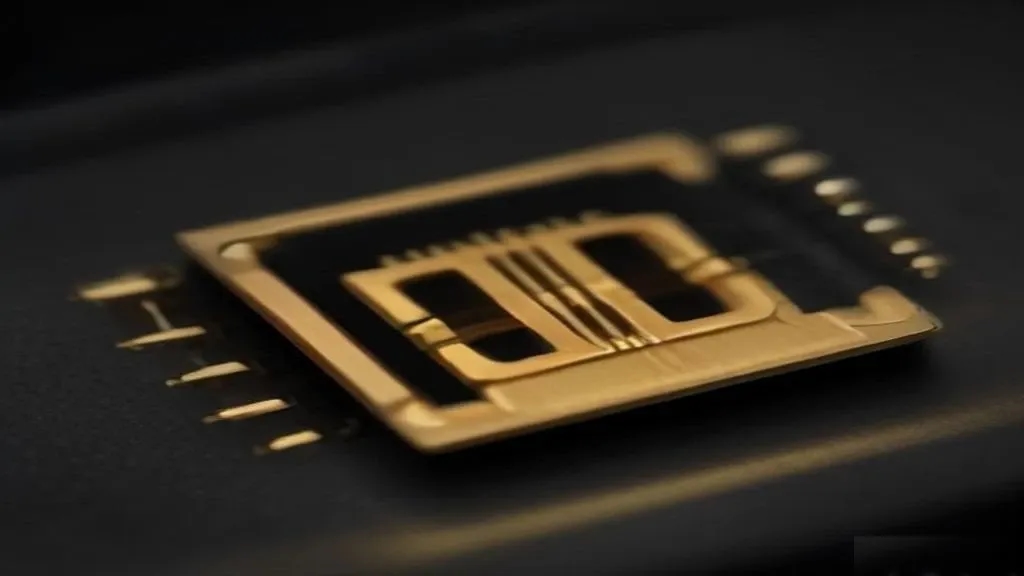
The 850nm VCSEL on a 10GBASE-SR module launches into OM3 multimode fiber at a minimum optical power of approximately −7.3 dBm, with a receiver sensitivity floor near −9.9 dBm — yielding the 2.6 dB minimum power budget that IEEE Std 802.3ae-2002 Clause 52 defines over 300m of OM3. The 1310nm DFB on a 10GBASE-LR module runs OS2 single-mode and lifts that budget to roughly 6.2 dB over 10km because modal dispersion and connector loss collapse to near zero on 9/125 glass. The same physics scales into 25GBASE-SR (SFP28, 850nm, OM4, ~70–100m) and 25GBASE-LR (SFP28, 1310nm, OS2, 10km). Across all four optics — SR, LR, SFP28 SR, SFP28 LR — the dominant variables are wavelength, fiber type, and modal bandwidth, not raw laser power.
Digital Diagnostic Monitoring is standardized by SFF-8472 Rev 12.4 at memory address 0xA2, surfacing five real-time channels: internal temperature, Vcc supply voltage, Tx bias current, Tx output power (dBm), and Rx received power (dBm). That telemetry is the foundation of any credible link budget. The power budget equation is straightforward:
Available Budget (dB) = Min Tx Power (dBm) − Rx Sensitivity (dBm)
For an SR module over a 100m OM3 run, the engineer subtracts approximately 0.1 dB/m of fiber attenuation, ~0.3 dB per mated LC duplex connector pair, and one splice loss if present. The remaining headroom must exceed 3 dB to absorb laser aging, connector contamination, and thermal drift per TIA/EIA-568-D. If your measured Rx power sits within 3 dB of the sensitivity floor, replace the patch cord and re-clean the ferrules before blaming the optic.
Key Takeaway: A standards-compliant SFP+ or SFP28 is only as reliable as the 3 dB operating margin between received power and the receiver sensitivity threshold — DDM is what lets you prove that margin in real time.
Hardware Comparison: Alpha Bridge vs FS.com vs Cisco OEM vs Generic
| Parameter | Alpha Bridge (Strinex) | FS.com Equivalent | Cisco OEM | Generic / Refurbished |
|---|---|---|---|---|
| **Data Rate** | 1G / 10G / 25G SFP28 | 1G / 10G / 25G SFP28 | 1G / 10G / 25G SFP28 | 1G / 10G (rare 25G) |
| **Wavelength / Fiber** | 850nm OM3 / 1310nm OS2 | 850nm OM3 / 1310nm OS2 | 850nm OM3 / 1310nm OS2 | Mixed, often undocumented |
| **Max Reach** | 300m SR / 10km LR | 300m SR / 10km LR | 300m SR / 10km LR | Unverified, often derated |
| **DDM / DOM (SFF-8472)** | Yes — calibrated | Yes | Yes | Partial / uncalibrated |
| **Switch Compatibility** | Cisco, Juniper, Arista, MikroTik | Cisco, Juniper, Arista, MikroTik | Cisco only (vendor-locked) | Variable |
| **UAE Delivery Time** | Same-day ex-stock Dubai | 4–7 business days air transit | Channel-dependent | Channel-dependent |
| **Warranty** | Local UAE replacement desk | Overseas RMA return | 90-day / 1-year (model-specific) | 30–90 days |
For paired deployments, the Alpha Bridge ASFP-10G-SR covers 300m OM3 uplinks and the Alpha Bridge ASFP-10G-LR handles 10km OS2 single-mode runs; both ship from the Strinex Dubai warehouse with verified SFF-8472 calibration. For 1G aggregation switches, the Alpha Bridge ASFP-1G-LX provides 1310nm single-mode interoperability.
The differentiating engineering factor is DDM integrity. Refurbished and "pulled" optics frequently report Tx power values that drift ±2 dB from the actual launch — enough to mask a failing laser and create intermittent bit errors that only appear under load. Alpha Bridge modules ship factory-calibrated; the SFF-8472 calibration constants at A2h are written against a NIST-traceable optical source.
Multi-Vendor Switch Compatibility Matrix & CLI Unlock
Conformance to SFF-8431 (mechanical/electrical) and SFF-8472 (diagnostic) is the prerequisite for any cross-vendor optic. What separates a plug-and-play deploy from a %PHY-4-SFP_NOT_SUPPORTED outage is the vendor's EEPROM whitelist check. The matrix below maps each platform to the unlock path required for non-OEM optics.
| Platform / OS | Default Non-OEM Behavior | Unlock Command / Procedure |
|---|---|---|
| **Cisco IOS-XE** (Catalyst 9300/9500) | Logs `%PHY-4-SFP_NOT_SUPPORTED`, may errdisable port | `service unsupported-transceiver` + `no errdisable detect cause sfp-config-error` (global config) |
| **Cisco NX-OS** (Nexus 9000) | Logs warning, link may stay up | No command required by default; verify with `show interface ethernet X/Y transceiver` |
| **Juniper Junos** (EX4300, QFX5100) | Native support for MSA-compliant optics | No command required; verify with `show chassis hardware detail` |
| **Arista EOS** (7050SX / 7280R) | Native support, displays third-party vendor string | No command required; verify with `show interfaces transceiver` |
| **MikroTik RouterOS** (CCR2216, CRS504) | Native support, no vendor check | No command required; verify with `/interface ethernet monitor [find] once` |
The Cisco Catalyst unlock, in full:
1configure terminal2 service unsupported-transceiver3 no errdisable detect cause sfp-config-error4 end5 write memoryAfter reload, the port brings the link up and DDM/DOM telemetry populates correctly under show interface transceiver detail. Note that Cisco NX-OS handles third-party optics more leniently than IOS-XE, and Junos / EOS / RouterOS do not enforce an OEM whitelist at all — these platforms rely on SFF-8431 and SFF-8472 MSA compliance as the sole gate.
The Alpha Bridge optics in this guide are cross-flashed with vendor-neutral EEPROM profiles that satisfy SFF-8431 identification and SFF-8472 calibration, eliminating the unlock requirement entirely on Juniper, Arista, and MikroTik hardware. For SFP28 (25G) deployments on Nexus 9300-EX/FX or Arista 7280R, the same SFF-8432 mechanical form factor and SFF-8472 diagnostic map apply — confirm with show interface transceiver detail that both Tx and Rx power report valid dBm values rather than N/A.
Field Deployment, Insertion Loss & Fiber Maintenance
Hot-pluggable SFP+ and SFP28 cages accept insertion under power, but the optical side demands discipline. Bend radius for 3mm jacketed patch cord is >30 mm (1.2 in) under no load; tighter bends induce macrobending loss that drops Rx power by 1–3 dB without raising a single alarm. Before every mating, inspect both LC ferrule end-faces against IEC 61300-3-35 — a single fingerprint on a 50µm core can attenuate a 10GBASE-SR signal by 4 dB and a 25GBASE-SR signal by even more.
Recommended field toolchain for insertion loss verification and BER sanity:
- Fluke SimpliFiber Pro — integrated optical power meter and visual fault locator for measuring absolute dBm loss against the sensitivity floor.
- Viavi SmartOTDR — handheld OTDR for characterising splice and connector loss across the full fiber span.
- Jonard Tools FCC-250 — IEC 61300-3-35-aligned one-click cleaner for LC/UPC and LC/APC ferrules.
Bit error rate (BER) on a healthy 10GBASE-SR or 25GBASE-SR link sits below 10⁻¹²; anything above 10⁻⁹ under normal traffic indicates connector contamination, fiber microbend, or laser aging visible in the DDM Tx bias current trend. Replace before the optics fails entirely.
Frequently Asked Questions
What is the practical difference between 850nm VCSEL and 1310nm DFB transceivers?
The 850nm VCSEL is cheaper, runs on OM3/OM4 multimode, and maxes out around 300m (10G) or 70–100m (25G). The 1310nm DFB costs more, runs on OS2 single-mode, and reaches 10km — choose based on fiber plant, not speed.
Can I use a 10GBASE-SR SFP+ over single-mode fiber?
No. SR is specified for multimode only; the 850nm VCSEL does not couple efficiently into 9/125 single-mode core. Use 10GBASE-LR for OS2.
Do I need `service unsupported-transceiver` on every Cisco platform?
Only on IOS-XE Catalyst platforms with the OEM whitelist enforced. NX-OS, Junos, Arista EOS, and MikroTik RouterOS do not require any CLI unlock for MSA-compliant third-party optics.
What is the minimum optical budget I should leave as safety margin?
At least 3 dB above the calculated span loss, per TIA/EIA-568-D. Anything less risks link flapping when the laser ages or temperatures shift in the rack.
Where can I buy Alpha Bridge optics with same-day dispatch in UAE?
Strinex maintains ex-stock inventory at the Dubai warehouse and ships same-day across the Emirates; check the live Strinex catalog for current stock and warranty terms.
Key Takeaways for Network Architects
- MSA Before OEM: SFF-8431 mechanical, SFF-8432 for SFP28, and SFF-8472 diagnostic compliance are the real interoperability gate — OEM vendor codes are a software-layer whitelist, not a hardware-layer requirement.
- 3 dB Rule: Never deploy a link with less than 3 dB margin between measured Rx power and the receiver sensitivity floor.
- CLI Unlock: Cisco IOS-XE Catalyst needs
service unsupported-transceiver+no errdisable detect cause sfp-config-error; other vendors do not require any unlock. - DDM Validation: Always confirm Tx bias current, Tx power, and Rx power populate correctly post-install — N/A fields mean the EEPROM did not negotiate SFF-8472 cleanly.
- Bend Radius: Hold fiber patch cords to >30 mm bend radius and clean every LC ferrule before mating to keep insertion loss under 0.3 dB per mated pair.
Conclusion & Local UAE Procurement
Architecting a multi-vendor SFP+ and SFP28 fabric in 2026 rests on three pillars: IEEE 802.3 optical physics, SFF-8472 diagnostic telemetry, and a clear-eyed view of each switch OS's vendor-lock posture. The Alpha Bridge ASFP-10G-SR is the right module for 300m OM3 uplinks across Cisco Catalyst, Juniper EX/QFX, Arista EOS, and MikroTik RouterOS fabrics; the ASFP-10G-LR extends that fabric to 10km on OS2 single-mode without changing CLI workflow. Stock availability, warranty terms, and RMA turnaround should be confirmed directly on the Strinex product portal before procurement orders are released. For same-day ex-stock Dubai dispatch and a local UAE replacement desk, see the live Alpha Bridge ASFP-10G-SR listing.